Edward VI
The King's CurseEdward VI is the son of Henry VIII and Jane Seymour, whose birth in 1537 gives the Tudor succession its long-sought male heir. The narrative presents him first as a newborn and then as a thriving infant, while holding open the uncertainty that has shadowed the royal family: survival at birth does not guarantee a future king.
Identity and dynastic context
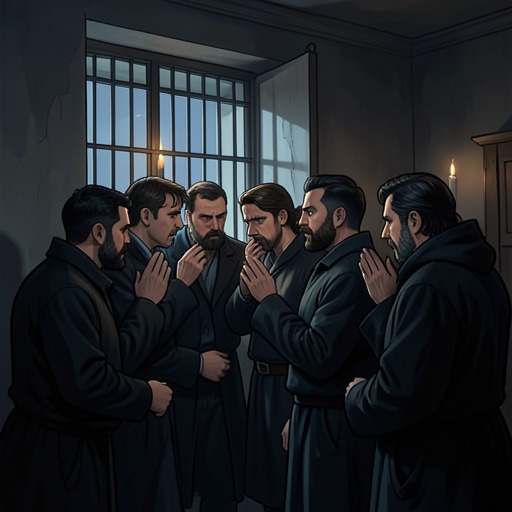
Before Edward’s birth, the absence of a surviving son makes the question of succession an urgent political concern. Henry VIII’s elevation of Henry FitzRoy as a possible heir alarms those who fear that Princess Mary Tudor will be set aside. Montague argues that the queen and princess must be defended, proposing that Geoffrey Pole carry reports and appeals to Reginald Pole abroad. The plan rests on the belief that a ruling from the Pope might force Henry to take the queen back. Edward is not yet part of this dispute, but his eventual birth answers the dynastic need that gives such arguments their force.
The expectation of a son also shapes the court’s response to the queen’s pregnancies. A male child, the narrative observes, would overturn claims that the queen was weak or unable to bear an heir, and would alter the standing of those seeking the king’s favor. Edward’s importance therefore begins before his birth: he represents both a child and the possibility of securing the succession without displacing the king’s legitimate daughter.
Birth and recognition
News of the birth reaches Margaret Pole at L’Erber in London in autumn 1537. Bells announce that Jane Seymour has had a boy. Margaret wishes the queen and child well, but the household cannot openly ask whether the newborn is strong: under the new laws, such a question could be taken to cast doubt on the king’s potency.
Subsequent reports bring reassurance. The baby is well and thriving, and he is christened Edward. Princess Mary Tudor carries him during the ceremony. His arrival changes the balance of succession: if he lives, he becomes the new Tudor heir, and Mary will not be queen. Yet the account does not treat his apparent health as certainty. Margaret recalls the four losses suffered by Katherine of Aragon and knows that a healthy baby may still not live to become king.
Family and loss
Edward’s birth is followed by a second crisis. The queen’s physicians are summoned back to Hampton Court, not because the baby is ill, but because Jane herself has become sick after giving birth. Margaret prays for her, but Jane dies that night, only two weeks after Edward’s birth. The narrative thus places the child’s survival beside his mother’s death: the succession gains a male heir at the cost of the queen who bore him.
Henry VIII is reported to be devastated by Jane’s death. Before Edward’s birth, he had already grieved for Henry FitzRoy and wondered aloud whether a curse explained the loss of those he loved. That earlier fear gives the new birth a charged context, but the account does not say that Edward’s arrival resolves the king’s grief or ends his sense of misfortune.
Narrative significance
Edward’s infancy turns the succession from an open crisis into a conditional promise. His christening and reported good health establish him as the heir, while Mary’s role in carrying him at the ceremony makes the altered position of the king’s daughter visible within the same public event. But the narrative’s memory of earlier royal child losses prevents the reader from mistaking the birth for a settled future.
The contrast between dynastic office and vulnerable human life runs through Edward’s introduction. The court’s laws make even a question about the child’s health politically dangerous, while the king’s claim to exalted authority cannot protect his family from illness and bereavement. Edward is therefore presented not through later deeds, but through the hopes and uncertainties gathered around his birth: an heir whose survival matters to the kingdom, and a baby whose future remains unwritten.